


















Fume Hoods & Fume Cupboards
A fume hood, also known as a fume cupboard, is a ventilated enclosure that draws hazardous chemical fumes away from the user and exhausts them out of the laboratory.
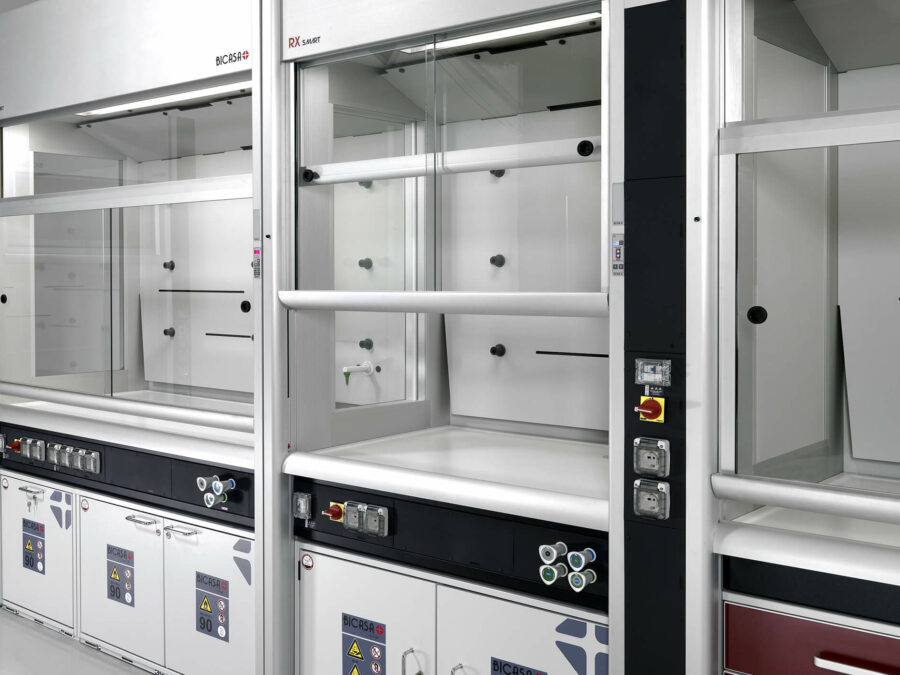
IT Tech supplies the Bicasa RX Full and RX Smart ranges in Singapore, each built on a modular anodised aluminium structure. Our engineering team can also design, install and commission your fume hood as part of a wider lab fit-out.
List of Products from this SubCategory

Types of Fume Hoods and Fume Cupboards
| Type | How fumes are handled | Chemical suitability | Installation needs | Typical use |
|---|---|---|---|---|
| Ducted fume hood | Extracts contaminated air through ductwork to an exhaust fan, which discharges it outside the building. | The widest range, including volatile, corrosive and high-volume chemical work. | Ductwork, an exhaust fan and make-up air, planned with the lab's HVAC design. | Chemistry, analytical and QC labs with varied or heavy chemical use. |
| Ductless (filtered) fume hood | Passes air through filters, typically activated carbon, and returns the cleaned air to the room. | Known chemicals in modest volumes that the filters are rated to capture. | No ductwork. Needs filter monitoring and scheduled filter replacement. | Teaching labs, routine low-volume work and sites where ducting is impractical. |
| Benchtop or portable fume hood | Describes how the unit is mounted, not how it extracts. Most compact models use filtration; some connect to a duct. | Depends on the extraction method, as above. | Minimal. Sits on an existing bench and can often be relocated. | Small-scale procedures, sample preparation and temporary setups. |
Sizing
The Bicasa RX Full and RX Smart ranges each come in four widths: 1.2BT, 1.5BT, 1.8BT and 2.1BT. Size the hood around the largest apparatus you will run inside it, the number of people working at it at once and the bench or wall length you have available.
A wider hood gives more working space but usually needs a higher exhaust volume, so factor your ventilation capacity into the decision.
Construction
Every Bicasa RX model is built on an anodised aluminium structure with a modular design. Anodising gives aluminium a hard, corrosion-resistant finish suited to chemical environments, and the modular build is designed to integrate with your benches, services and the rest of your lab layout.
Fume Hood Safety and Compliance Considerations
A laboratory fume hood only protects its user when it is set up, used and maintained correctly. Before you buy, plan for these four practices:
-
Face velocity
The speed of air entering the sash opening. Too low and fumes can escape; too high and turbulence can pull them back out. Set and check it against the manufacturer's specification and your lab's risk assessment.
-
Sash height
Work with the sash at the lowest practical height. A lower opening helps maintain face velocity and adds a physical barrier between you and the reaction. Mark the maximum safe working height on the hood.
-
Airflow monitoring
An airflow monitor or alarm warns users the moment extraction drops below a safe level, so nobody keeps working in a hood that has stopped protecting them.
-
Periodic testing
Test the hood after installation, after any relocation or change to the exhaust system, and at regular intervals set by your safety programme.
Fume hoods are commonly tested against recognised standards such as EN 14175 in Europe and ASHRAE 110 in the United States, which set out methods for measuring containment and airflow performance. Ask for the test standard and results that apply to the specific model you are buying, and check that the full installation, including ductwork and exhaust, meets the local requirements for your facility.
Frequently Asked Questions
What's the difference between a fume hood and a fume cupboard?
There is no difference: fume hood and fume cupboard are two names for the same ventilated enclosure. Fume cupboard is the traditional British and European term, while fume hood comes from American usage. Both are used in Singapore, where fume hood is the more commonly searched name.
What is the difference between a fume cupboard and a biosafety cabinet?
A fume cupboard protects the user from chemical fumes by drawing contaminated air away and out of the lab. A biosafety cabinet protects the user, the sample and the environment from biological agents using HEPA-filtered airflow. If your work involves infectious material rather than hazardous chemicals, see our biosafety cabinet range.
Are ducted and ductless (filtered) models both available?
Yes. The Bicasa RX models on this page are ducted, while filtered, duct-free models are listed in our ductless fume hood range.
What width configurations are available?
The Bicasa RX Full and RX Smart ranges are available in 1.2BT, 1.5BT, 1.8BT and 2.1BT widths. See the sizing guidance under Types of Fume Hoods and Fume Cupboards above to choose the right one.


Keep your team protected from hazardous chemical fumes
Explore our fume hoods and fume cupboards, or speak to our specialists about the right fit for your applications.
Enrich your scientific journey through our innovative products, delve into cutting-edge services, and unlock the potential for groundbreaking research. Experience excellence at every stage with IT Tech.

Customer Care Team
Typically replies in a few hours

Customer Care Team
Hi there
How can i help you today?
How can i help you today?

Start Whatsapp Chat