Choosing a Laboratory Fermenter: Which Scale Do You Need?
| Scale |
Typical working volume |
Sterilisation method |
Level of automation |
Typical use |
| Benchtop |
Up to around 20 L. GENESIS: 7.5 to 20 L total volume; IO for mini-scale runs. |
Often autoclavable; GENESIS is sterilisable in place (SIP). |
Manual to fully automated. |
Strain screening, media optimisation and teaching. |
| Pilot |
Tens to hundreds of litres (S series: 5 to 200 L). |
Usually sterilisable in place (SIP). |
High (S series). |
Process development and scale-up trials. |
| Industrial |
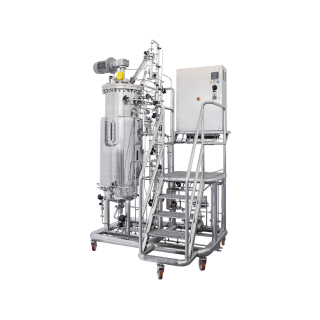
Hundreds to tens of thousands of litres (I series: 300 to 30,000 L). |
Sterilisable in place (SIP). |
High (I series). |
Commercial production and large-batch runs. |
Bacteria, yeast and fungi differ in oxygen demand, shear sensitivity and heat output, which shapes the agitation, aeration and cooling you need. Decide early between batch and fed-batch processes: fed-batch work depends on accurate pump control to add nutrients mid-run.
If a process will move from bench to pilot and production, choose vessels with comparable geometry and controls at each stage, so conditions transfer without re-optimising from scratch.
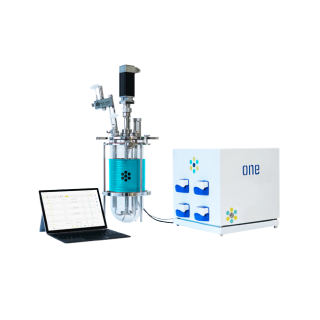
Remote monitoring, such as the Wi-Fi connectivity on the One, lets you track runs remotely and keeps a record for reporting and repeat batches.
Microbial Fermentation Applications for Laboratory Fermenters
A laboratory fermenter gives you a repeatable, controlled environment for growing microorganisms at the scale your work demands. Common applications include:
-
Biopharma and enzyme production:
Producing recombinant proteins, enzymes and other biologics from bacterial or yeast cultures.
-
Food and beverage R&D:
Developing starter cultures, flavours and fermented products under tightly controlled conditions.
-
Vaccine and probiotic development:
Growing the bacterial and yeast strains used in vaccine research and probiotic formulation.
-
Academic and teaching labs:
Giving students hands-on experience of fermentation and bioprocess control.
Working with cell cultures as well as microbes? Explore our wider Bioreactor & Cell Culture range.
Frequently Asked Questions
What is a laboratory fermenter?
A laboratory fermenter (also spelled fermentor) is a vessel that grows microorganisms such as bacteria, yeast or fungi under controlled conditions. Its main function is to hold temperature, pH, dissolved oxygen and mixing at set values, so the culture produces a consistent result, whether that is biomass, an enzyme or a fermented product.
What is the difference between a fermenter and a bioreactor?
A fermenter is a vessel built for microbial fermentation, growing bacteria, yeast or fungi. A bioreactor is the broader term for any vessel that supports a controlled biological process, including mammalian cell culture, which needs gentler mixing and tighter control. Every fermenter is a type of bioreactor, but not every bioreactor is designed for microbes. See our bioreactor range for cell culture systems.
What scale of fermenter does IT Tech supply?
IT Tech supplies Solaris fermenters from benchtop to industrial scale: the GENESIS benchtop system (7.5 to 20 L), the IO mini fermenter, the S series (5 to 200 L) and the I series (300 to 30,000 L) and the fully automated One (XX to XX).
For larger or custom requirements, send us an enquiry with your target volume and process.
Does IT Tech provide installation, commissioning or validation support for fermenters?
Support for each laboratory fermenter is scoped to your system and facility. Our team can advise on installation and commissioning requirements, and our preventive maintenance service helps keep equipment running reliably after handover. If your process needs validation or GMP documentation, share your requirements when you enquire and we will confirm what can be provided.