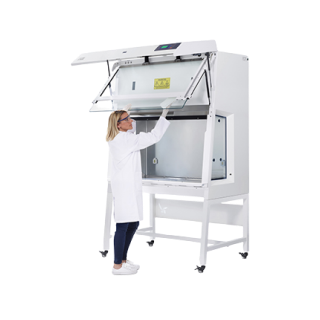
Class III Biological Safety Cabinets (BSC)

Achieve the highest level of laboratory containment with our Class III biosafety cabinets, designed specifically for handling the world’s most dangerous pathogens. Often referred to as "glove boxes," our leak-proof and gas-tight biosafety cabinets provide protection against high-risk BSL-3 or BSL-4 agents.


At IT Tech, we specialize in providing high-performance Class III containment solutions configured for maximum security. Our biosafety cabinets are engineered to maintain high pressure differentials and feature double-HEPA filtration on exhaust air, meeting the most rigorous biosafety regulations.

How Class III Biosafety Cabinets Work

A Class III biosafety cabinet operates as a completely sealed, gas-tight enclosure, providing the ultimate defense by physically isolating the operator from the workspace. Unlike Class II biosafety cabinets, which rely on air curtains, Class III systems use a permanent physical barrier, making them mandatory for BSL-4 pathogens and high-hazard research.

  • Negative Pressure Environment: Designed to maintain a constant internal negative pressure (typically 0.5 w.g. or higher), ensuring that any physical breach results in air moving strictly into the cabinet to prevent aerosol escape.
  • Double-HEPA Filtration: Protect your facility with dual-stage exhaust filtration. While the inflow air is HEPA-filtered to maintain sample integrity, all exhaust passes through two ultra-high-efficiency HEPA filters in series for absolute environmental security.
  • Physical Manipulation: Conduct high-risk procedures with absolute isolation via heavy-duty, gas-tight rubber sleeves and gloves. This secure interface ensures zero direct contact with the internal atmosphere, providing maximum functional reliability for your most sensitive operations.
  • The Airflow Path:
    • Inflow: Ambient room air is drawn through a dedicated inlet filter, establishing a sterile downward flow.
    • Internal Circulation: Unidirectional, laminar airflow sweeps the work zone, eliminating cross-contamination and maintaining sample integrity.
    • Exhaust: All air is pulled through a double-stage filtration system before being safely discharged via a dedicated, hard-ducted external exhaust.

List of Products from this SubCategory

A figure promotion likely to promote products for their business.

BiOptima series

Telstar BiOptima: High-level protection, low energy consumption, and user-friendly design for efficient biosafety in laboratories.

Key Features & Benefits of Class III BSC

Our Class III biosafety cabinets transition your facility from airflow-based protection to a permanent, physical isolation barrier, ensuring uncompromising safety for high-hazard research.

  • Gas-Tight Enclosure: Engineered with a fully welded, leak-proof stainless steel frame, providing a 100% physical barrier that completely isolates hazardous pathogens from the laboratory environment.
  • Glove Interface: Features a secure, airtight port system equipped with heavy-duty rubber gloves, allowing for precise sample manipulation while maintaining a permanent atmospheric seal.
  • High-Efficiency Filtration: Integrated with dual-stage HEPA/ULPA exhaust configurations to ensure the highest level of particle capture before air is discharged.
  • Pressure Monitoring and Alarms: Equipped with high-accuracy sensors that provide real-time tracking of internal negative pressure, with instant audible and visual alerts to prevent containment breaches.
  • Compliance and Certification: Developed to meet stringent global safety benchmarks, including NSF/ANSI 49 and EN 12469 standards and BSL-4 laboratory requirements, ensuring your facility remains fully audit-ready.

Choosing a Class III BSC – What to Evaluate for Your Lab

Maximize the safety and efficiency in your high-containment facility by selecting a Class III biosafety cabinet tailored to your specific operational needs. 

  • Biosafety Risk Level: Ensure your workflow aligns with BSL-3 or BSL-4 protocols, where a gas-tight physical barrier is mandatory for handling high-risk pathogens that exceed the capabilities of standard air curtains.
  • Containment Requirements: Specify your needs for precise pressure differentials or specialized inert gas environments to protect oxygen-sensitive materials without compromising the containment seal.
  • Lab Infrastructure: Verify that your facility is configured to support the heavy-duty, hard-ducted external exhaust systems essential for safe Class III operation.
  • Material Transfer Needs: Match your throughput volume with the proper transfer technology and choose between "dunk tanks," double-door pass-through boxes, or Rapid Transfer Ports (RTPs) to maintain a sterile chain of custody.
  • Long-term Maintenance and Certification: Select biosafety cabinet models featuring accessible glove-change systems and intuitive HEPA filter housings to minimize downtime during mandatory annual certifications and leak testing.
  • Budget and Operational Cost vs. Risks: Balance initial capital expenditure against long-term motor efficiency and sensor reliability to mitigate the catastrophic operational and safety risks of a containment breach.
Testimonial Image

Get Your Class III Biosafety Cabinet Today

Don't compromise on the safety of your personnel or the integrity of your high-risk research. IT Tech is a lab equipment distributor of industry-leading Class III containment solutions that bridge the gap between absolute security and operational efficiency.

Reach out to us for lab engineering expertise and local technical support.

Testimonial Image

Enrich your scientific journey through our innovative products, delve into cutting-edge services, and unlock the potential for groundbreaking research. Experience excellence at every stage with IT Tech.

Frequently Asked Questions About Biosafety Cabinet Class III


How does a Class III BSC differ from Class I and Class II BSCs?

Class III biosafety cabinets provide a total physical barrier. It is gas-tight and fully sealed, requiring the operator to work through heavy-duty gloves, offering the highest level of protection available for personnel and the environment.

When should I use a Class III BSC?

A Class III biosafety cabinet is mandatory when working with BSL-4 agents or high-risk pathogens where any exposure could be fatal. It is also used for highly sensitive applications requiring a controlled, airtight atmosphere for maximum sample isolation.

What types of pathogens require a Class III BSC?

A Class III biosafety cabinet is required for handling extremely hazardous pathogens, such as Ebola, Marburg virus, or highly concentrated aerosolized BSL-3 agents. Any biological agent categorized as "high-risk" by health authorities necessitates this level of physical containment.

How does a Class III BSC maintain containment?

The Class III biosafety cabinet maintains containment through a permanent physical barrier and a continuous internal negative pressure of at least -0.5” w.g.. This ensures that in the event of a breach, air only flows inward, preventing hazardous particles from escaping.

How are materials transferred in and out of a Class III BSC?

Materials enter or exit a Class III biosafety cabinet through specialized, interlocked pass-through boxes, "dunk tanks" filled with disinfectant, or double-door autoclaves. These mechanisms allow for the safe transfer of samples without ever breaking the cabinet’s airtight seal.

What is the filtration system used in a Class III BSC?

A Class III biosafety cabinet utilizes a redundant filtration system. Supply air is HEPA-filtered, while exhaust air passes through two ultra-high efficiency HEPA filters in series (or HEPA plus ULPA) to ensure that discharged air is completely sterile and safe.

How often should a Class III BSC be certified or maintained?

Class III biosafety cabinets must be certified upon installation, after being moved, and at least annually. Maintenance includes rigorous pressure decay testing to confirm gas-tight integrity, airflow velocity checks, and sensor calibration to ensure absolute containment reliability.

Customer Care Team
Typically replies in a few hours
Customer Care Team
Hi there
How can i help you today?
WhatsApp logo in green with white phone icon inside speech bubble
Start Whatsapp Chat
WhatsApp logo in green with white phone icon inside speech bubble
Customer Care Team
Typically replies in a few hours
Customer Care Team
Hi there
How can i help you today?
WhatsApp logo in green with white phone icon inside speech bubble
Start Whatsapp Chat
WhatsApp logo in green with white phone icon inside speech bubble