













10 Types of Centrifuges: An Essential Guide for Your Laboratory
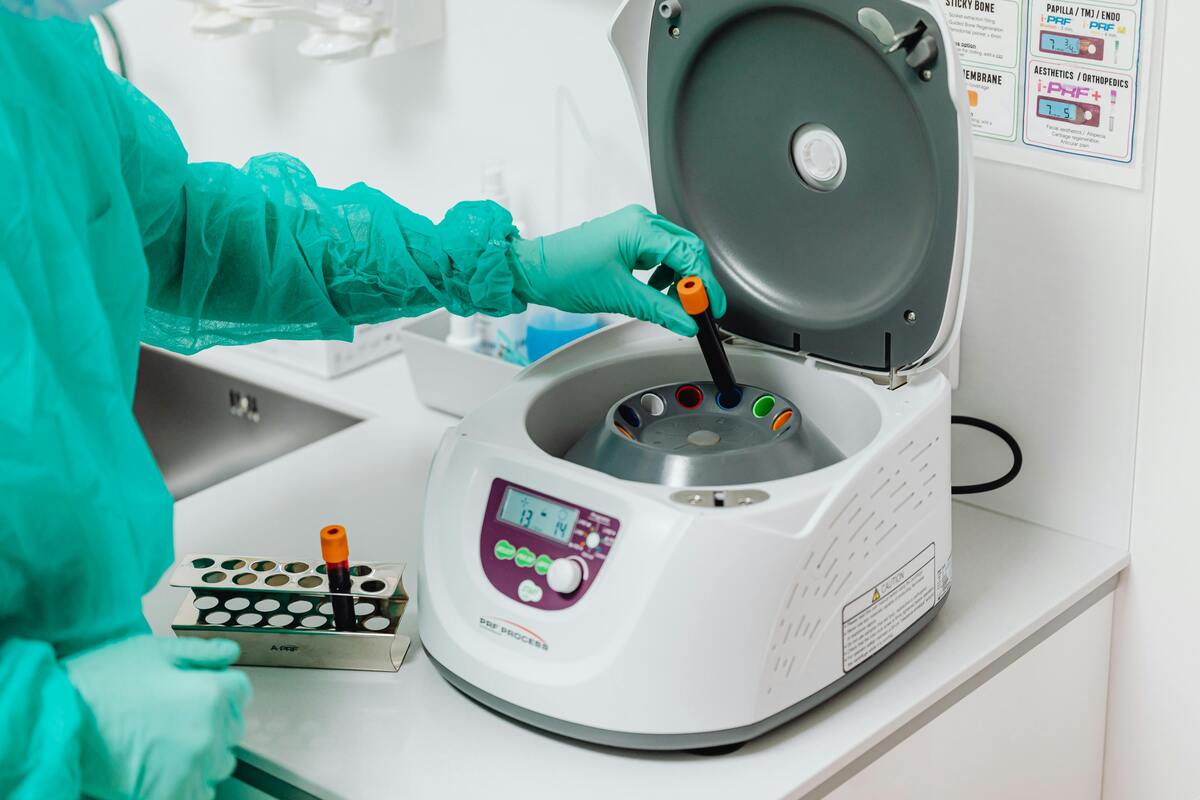
The centrifuge stands as a cornerstone of modern scientific inquiry, a fundamental tool in pioneering breakthroughs across medicine, Biology, and Chemistry. From preparing clinical samples to isolating subcellular components, this machine is a cornerstone of laboratory operations.
However, its efficacy is entirely dependent on selecting the right instrument for your application. Achieving precision, efficiency, and reproducible results demands a deep understanding of the distinctions between the various types of centrifuges.
With so many options available, from benchtop, vacuum, and gas centrifuges to microcentrifuges, high-speed, low-speed, refrigerated, and ultracentrifuges, how can you be sure you have the right machine to drive your next breakthrough?
What is a Centrifuge and How Does It Work?
A centrifuge is a precision-engineered instrument that dramatically accelerates the natural process of sedimentation. While gravity will eventually cause denser particles in a liquid to settle, this process can be impractically slow, often taking hours or even days. A centrifuge overcomes this limitation by replacing the force of gravity with a much more powerful centrifugal force, generated by spinning samples at extremely high speeds.
This amplified force compels denser particles within a mixture to migrate away from the axis of rotation, while less dense components move toward it. The force exerted on the samples is measured as Relative Centrifugal Force (RCF), expressed in multiples of gravity's pull or gravitational force (g-force).
By giving researchers precise control over spin speed or Revolutions Per Minute (RPM) and duration, a centrifuge enables highly specific separations. This allows components like cells, organelles, and proteins to be sorted and isolated based on their physical properties, including size, shape, and density.
Parts of a Centrifuge
While their designs vary, most lab centrifuges share these components that work together to ensure safe and effective operations.
1. Motor
The motor is the engine of the centrifuge, which is responsible for spinning the rotor. Engineered for high torque and precise speed control, it enables seamless acceleration and deceleration, while maintaining a constant rotational velocity during a run.
2. Rotors
Rotors hold the sample containers (tubes or bottles) and rotate them around a central axis. Choosing the correct rotor is just as important as selecting the right centrifuge itself, as it directly impacts the separation outcome.
The main types of rotors include:
- Fixed-Angle Rotors: These rotors hold tubes at a stable angle, typically between 25 and 45 degrees. They are ideal for pelleting, where the goal is to collect solid material at the bottom of the tube. The angled position creates a shorter path for particles, reducing run times.
- Swinging-Bucket Rotors: Also known as horizontal rotors, these rotors have buckets that hold the sample tubes. The buckets hang vertically when the rotor is at rest, but swing out to a horizontal position (90 degrees) as it spins. This design is perfect for density gradient separations, as the separated layers form horizontally, preventing disruption when the rotor stops.
- Vertical Rotors: In these specialized rotors, the tubes are held vertically. They offer the shortest possible path length for particles, resulting in swift separation times. They are primarily used for isopycnic separations of macromolecules like DNA.
3. Control Panel
The Control Panel serves as the centrifuge's command center. Modern digital displays offer users precise control over key parameters, including velocity or RPM, RCF, run time, and temperature. This interface also integrates essential safety alerts and allows for programmable memory to streamline routine protocols.
4. Sample Containers
Once the sample run is programmed, its integrity relies on the proper containers. These specialized tubes, bottles, or microplates must be carefully selected to be chemically compatible with the samples and rated to withstand the intense RCF generated during operation.
5. Safety Interlocks
With the samples loaded, the primary safety interlock is the latch. This critical mechanism secures the lid, physically preventing it from opening while the rotor is in motion and safeguarding the user from the high-speed components within.
6. Lid
Working in tandem with the latch, the lid acts as a robust physical barrier over the rotor chamber. Many high-speed models feature reinforced lids specifically engineered to contain all moving parts in the unlikely event of a rotor failure, ensuring comprehensive laboratory safety.
Types of Centrifugation Techniques
To select the right centrifuge, it's best to understand the two primary methodologies used in the lab, as your scientific goal always dictates which is the correct machine for your line of work.
Preparative Centrifugation
Preparative centrifugation isolates and purifies specific biological materials from a mixture for subsequent analysis or use. This is the most common application in research and clinical labs.
Two main techniques fall under this category:
- Differential Centrifugation: This method involves a series of centrifugation cycles at progressively higher speeds. After each spin, the supernatant (liquid) is transferred to a new tube and spun again, leaving behind a pellet of increasingly smaller and less dense material at each step. It's used to separate major cellular components like nuclei, mitochondria, and ribosomes.
- Density Gradient Centrifugation: This more refined technique separates particles based on their buoyant density. A density gradient is created in the tube using a medium like sucrose or cesium chloride, and the sample is layered on top. During centrifugation, particles travel through the gradient and form distinct bands at the point where their density matches that of the surrounding medium.
Analytical Centrifugation
In contrast to preparative techniques, analytical centrifugation is used to study the physical properties of purified macromolecules. It employs sophisticated optical detection systems to monitor the sedimentation process in real-time, providing valuable data on molecular weight, purity, and conformational changes.
Types of Centrifuges
In response to a vast array of research needs, a diverse range of centrifuge models has been developed. Each is precisely engineered for specific applications, from processing high-volume clinical samples to isolating the smallest macromolecules. Therefore, choosing the instrument is a critical factor in the outcome of an experiment.
The 10 types of centrifuges include:
1. Benchtop or Tabletop Centrifuges
Benchtop or tabletop centrifuges are versatile, general-purpose machines found in almost every lab. They can accommodate a wide range of rotors and tubes, making them suitable for routine tasks like pelleting cells or separating blood samples.
2. Vacuum Centrifuges
Often called centrifugal evaporators, these devices use centrifugal force in a vacuum to prevent samples from boiling over during the evaporation of solvents. They are used to concentrate or dry samples like DNA, RNA, and proteins.
3. Gas Centrifuges
Gas centrifuges are highly specialized instruments not typically found in a life science lab. They are used to separate gases based on isotope mass, most notably for enriching uranium for nuclear applications.
4. Haematocrit Centrifuges
These are high-grade centrifuges used in clinical settings to determine the packed cell volume (PCV) of blood, which is the proportion of red blood cells. It spins small capillary tubes of blood at high speeds to separate the plasma and cellular components.
5. Microcentrifuge
Also known as a "microfuge," this is a compact benchtop unit designed for small sample volumes (typically 0.2 to 2.0 mL) in microtubes. They operate at high speeds and are essential for molecular biology applications like DNA purification and protein precipitation.
6. High-Speed Centrifuges
Operating at higher speeds than standard benchtop models, these centrifuges can generate significant RCF of up to 10,000 - 30,000 rpm. They are often refrigerated and used for more demanding separations, such as isolating subcellular organelles and viruses.
7. Low-Speed Centrifuges
These units operate at lower speeds, ranging from 300 to 6,000 rpm, and are ideal for separating delicate materials like whole cells or for harvesting large volumes of precipitate. They are staples for sample preparation in clinical and microbiology labs.
8. Refrigerated Centrifuges
Temperature control is crucial when working with sensitive biological samples, such as proteins and enzymes, which can denature at room temperature. Refrigerated centrifuges have a cooling system that maintains a precise, low temperature in the rotor chamber throughout the run. This feature is also available on many different types of centrifuges, from benchtop models to ultracentrifuges.
9. Continuous Flow Centrifuges
Designed for processing large volumes, continuous flow centrifuges allow a sample solution to be continuously fed into the rotor while it spins. The separated components are continually removed, making them ideal for industrial-scale bioprocessing, such as harvesting bacteria or yeast from large culture volumes.
10. Ultracentrifuges
Ultracentrifuges represent the pinnacle of centrifugation technology, capable of spinning at extremely high speeds (up to 100,000 rpm) to generate immense force (up to 1,000,000 x g). They require a vacuum to reduce heat from air friction and are split into two classes:
- Preparative Ultracentrifuges: Used to isolate tiny particles like ribosomes, viruses, and macromolecules.
- Analytical Ultracentrifuges: Equipped with optical systems to measure the properties of macromolecules during sedimentation.
5 Uses of Centrifuge in Laboratories
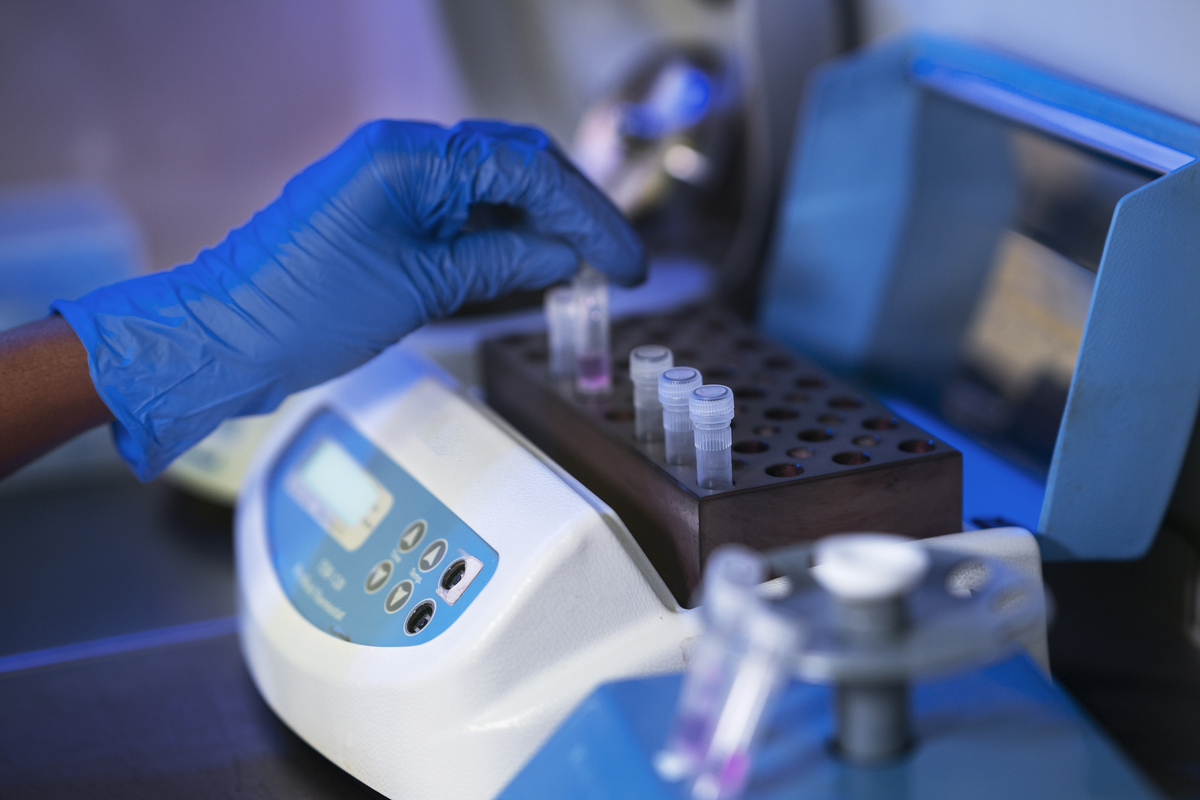
The versatility of the centrifuge makes it critical for numerous applications in the laboratory. These are the five common uses that highlight its importance:
1. Separation of Blood Components
In a clinical setting, centrifugation is a fundamental process used to separate the components of whole blood. This procedure isolates key components, including plasma, platelets, and red and white blood cells, which are vital prerequisites for a wide range of diagnostic tests.
2. Isolation of Cellular Organelles
To study the functions of subcellular components, scientists employ techniques like differential and density gradient centrifugation. These methods isolate specific organelles, including the nucleus and mitochondria, enabling their roles to be examined without interference from other cellular structures.
3. Purification of Nucleic Acids and Proteins
Centrifugation is a key step in protocols for purifying DNA, RNA, and proteins. For instance, ethanol precipitation followed by a microcentrifuge spin is a standard method for pelleting and cleaning nucleic acids.
4. Separation of Urine Components
Urinalysis often involves centrifuging a urine sample to concentrate solid components like cells, casts, and crystals into a pellet. This sediment is then examined under a microscope for diagnostic clues.
5. DNA Extraction and Purification
A classic example of a centrifuge is its role in DNA extraction kits. Steps like cell lysis, protein removal, and final DNA pelleting all rely on centrifugation to separate the desired material from contaminants.
Choose IT Tech for Your Centrifuge Needs
Choosing the right centrifuge is a strategic decision. It directly impacts your experimental accuracy, workflow efficiency, and research success, as an unsuitable instrument can compromise data, destroy samples, and waste resources.
As a leading laboratory supplies distributor, IT Tech is committed to empowering scientific advancement by providing high-quality, reliable laboratory equipment, furniture, and lab disposables and consumables. Our extensive range of lab centrifuges caters to every application, from routine clinical work to advanced molecular research. We can help you weigh your performance requirements against your budget and workflow, as our goal is to find a straightforward and effective solution that's the perfect fit for your lab.
Partner with us to equip your lab with the right layout and tools to optimize your workflow.
Products You may Like
Check out other IT- Tech product that suit your taste
Subscribe to our newsletter
Stay updated with IT-Tech Insights
Related posts
Check out other IT- Tech Scientific Resources